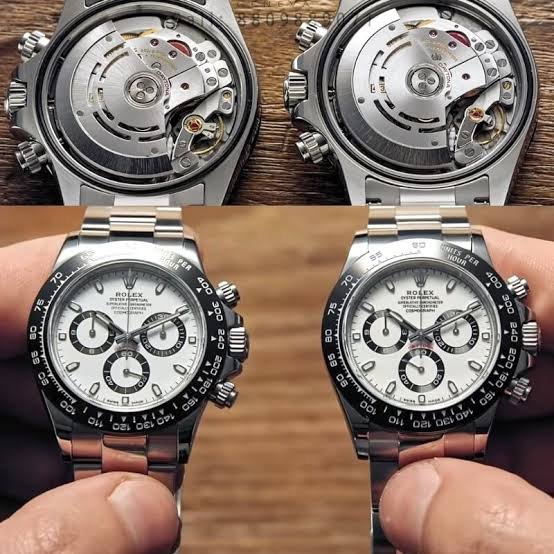
You see it all over the place. Listings for super clone Rolex watches toss around words like “Swiss movement,” “Swiss-grade,” or even “Swiss made.” It sounds good. It’s supposed to. But if you dig into what those phrases actually mean—and where these watches really come from—the picture gets a lot less clear.
The short answer is no. A super clone Rolex is not Swiss made. Not legally, not technically, and not in any way that would hold up to five minutes of scrutiny from someone who knows how the Swiss watch industry works. That doesn’t mean some super clones aren’t well put together. It just means the “Swiss” label is being used as a marketing shortcut, not a factual description.
Here’s what’s actually going on.
Why “Swiss Made” Gets Slapped on Everything
The term “Swiss Made” has real legal weight in the watch world. It’s protected under Swiss law, specifically the Ordinance on the Use of “Switzerland” or “Swiss” for Watches. For a watch to legally carry that label, at least 60% of its manufacturing costs must be incurred in Switzerland. The movement itself has to meet specific criteria for Swiss components and assembly. The watch must be assembled in Switzerland and pass final inspection there too.
None of that applies to a super clone. These watches are designed, manufactured, and assembled outside Switzerland—almost exclusively in China. The factories that produce them aren’t registered Swiss manufacturers. They don’t pay Swiss wages, Swiss taxes, or Swiss overhead. They don’t submit to Swiss quality control or Swiss legal oversight. So calling one “Swiss made” is either a misunderstanding or a deliberate exaggeration.
Some sellers use “Swiss” as shorthand for “good quality.” Others use it because they know it’s a trust signal. But it’s not a factual claim you can verify. It’s marketing copy.
Where Clone Movements Are Actually Manufactured
The movement is where the “Swiss” claim gets the most traction—and the most abuse. A genuine Rolex uses an in-house Swiss calibre. A super clone does not.
The top-tier clone movements—the VS3235, VS3135, DD4130, and their siblings—are manufactured in China. The VS3235, for example, is produced in collaboration with the Dandong Movement Factory, a Chinese movement manufacturer. VSF, the factory that popularized this movement, worked directly with Dandong to reverse-engineer Rolex’s proprietary calibres part by part. The result is a movement that looks and functions similarly to the genuine article. It runs at 28,800bph, offers a 70-hour power reserve, and even uses a full balance bridge. It’s an impressive piece of engineering for what it is.
But it’s not Swiss. It’s Chinese. Dandong is in Liaoning province, not the Jura mountains. The steel used in the case and bracelet is often 904L, which Rolex also uses, but that steel is sourced from Asian suppliers—not Swiss ones.
Some super clones do use genuine Swiss movements from brands like ETA or Sellita. These are usually older, off-the-shelf calibres that get dropped into replica cases. But those are the exception, not the rule. And even then, the watch as a whole still isn’t Swiss made—only one component is.
What “Swiss” Would Legally Require (and Why Clones Can’t Claim It)
Let’s be precise about the legal bar. Under current Swiss law, a watch can only be called “Swiss Made” if:
- At least 60% of the total production cost is incurred in Switzerland.
- The movement contains at least 60% Swiss-made components by value.
- Technical development takes place in Switzerland.
- The watch is assembled and finally inspected in Switzerland.
A super clone fails every single one of these. The development happens in Chinese factories reverse-engineering Swiss designs. The components are sourced from Chinese suppliers. The assembly is done in Chinese workshops. The final inspection—if there is one—is done by the same people who built it. There’s no Swiss involvement at any stage.
Some sellers try to get around this by using phrases like “Swiss-grade” or “Swiss-style.” These aren’t legally defined terms. They mean whatever the seller wants them to mean. “Swiss-grade” steel could just mean 316L or 904L that happens to meet a certain standard—it doesn’t mean it came from Switzerland. “Swiss-style” movement just means it looks like one.
Does Origin Even Affect Quality Here?
Here’s where it gets interesting. A movement doesn’t have to be Swiss to be good. The VS3235 is a legitimately well-made calibre for a clone movement. It keeps decent time, has a smooth sweep, and holds power reserve close to the genuine 3235. The metallurgy in the cases is solid—VSF uses 904L steel that’s been verified by independent testing. The sapphire crystals have proper AR coating. The ceramic bezels are well executed.
But there are real differences that matter over time. Genuine Rolex movements are built to last decades with proper servicing. Clone movements use cheaper materials in the escapement, the balance wheel, and the lubrication. They’re more prone to wear, less consistent in timekeeping, and harder to service because parts aren’t readily available. Water resistance is another area where clones don’t match the genuine article—Rolex’s pressure testing and gasket design aren’t replicated.
So no, the origin doesn’t guarantee quality. But it does correlate with longevity, serviceability, and resale value. A Swiss movement from a reputable manufacturer will outlast a clone movement nine times out of ten. That’s not snobbery—it’s materials science and quality control.
What to Actually Evaluate Instead of the Word “Swiss”
If you’re looking at a ROLEX super clone and the seller keeps saying “Swiss,” ignore that word and look at what actually matters.
First, the movement caliber. Ask what movement is inside. VS3235, VR3235, DD4130, SH4130—these are the names you want to recognize. They’re not Swiss, but they’re the best of what’s available in the clone space. If the seller can’t tell you which movement is in the watch, that’s a red flag.
Second, the materials. Does it use 904L steel? Sapphire crystal with AR coating? Ceramic bezel? These are the markers of a super clone tier watch. Lower-grade replica rolex skip these to save cost.
Third, the details. Check the date wheel magnification—genuine Rolex uses 2.5x. Check the rehaut engraving depth and alignment. Check the laser-etched crown at 6 o’clock. These are the tells that separate a good clone from a great one, even if the movement is Asian.
Fourth, the community. The best way to find a reliable source isn’t a search engine—it’s the forums and Reddit communities where buyers share QC photos and experiences. That’s where you’ll learn which factories are currently producing the best versions of which references.
Where to Actually Start Looking
The super clone market moves fast. Factories open and close. Clean Factory, for example, was raided in July 2025 and isn’t coming back. VSF is currently the default top-tier producer for most Rolex references. But that could change tomorrow.
If you’re serious about finding a well-made super clone, start with the community. Read the forums. Look at QC posts. Learn the terminology—SEL, DW, cyclops, rehaut. Understand what a good example looks like before you commit.
And when you see the word “Swiss” in a listing, treat it like you would treat “genuine leather” on a $50 bag. It might mean something. It probably doesn’t. The quality is in the details, not the label.