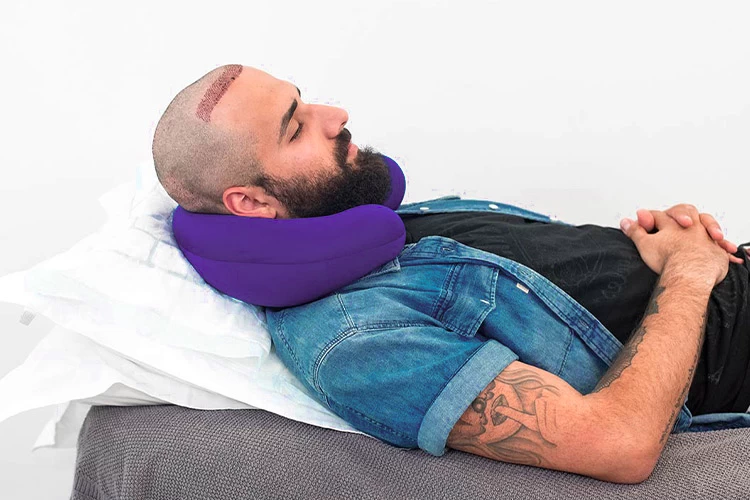

The best way to rest after surgery is to sleep on your back. Keep your head slightly raised for the first 7 to 10 days. When patients ask how to sleep after hair transplant procedures, the main goal is to protect the new grafts. This means avoiding pressure, friction, and swelling.
Using two pillows or a recliner helps maintain elevation and supports proper healing during the early recovery phase. Avoid sleeping on your side or stomach until your surgeon confirms the grafts are secure. After about two weeks, most patients can gradually return to their normal sleep position.
Key Takeaways
- Sleeping on your back with your head slightly elevated for the first 7 to 10 days protects newly placed grafts and helps reduce swelling.
- Avoid side or stomach sleeping early on, as pressure or friction can disrupt the recipient area and delay proper healing.
- Most patients can return to normal sleeping positions after about 10 to 14 days, once grafts are secure and surface healing has progressed.
- Using supportive tools such as extra pillows or a neck pillow improves stability during sleep and supports a smoother recovery process.
Why Sleep Position Matters After Hair Transplant Procedures
Sleep position directly affects how well transplant grafts stabilize in the scalp. During the first few nights, each hair follicle is still anchored into the recipient area, and unnecessary pressure can dislodge grafts or delay healing.
Friction from pillows or turning onto your side may irritate both the transplanted areas and the donor area. Proper positioning reduces the risk of trauma and supports the early stages of the recovery process.
Swelling is another important factor. Fluid can accumulate in the forehead if the head is flat, which is why keeping the head slightly elevated is routinely recommended after hair transplant surgeries.
How to Sleep After Hair Transplant: First 3 to 5 Days
For the first several nights, sleeping after hair transplant surgery requires extra caution. The safest method is lying on your back in an elevated position with two pillows or in a recliner. This approach protects the grafts and helps reduce swelling.
A practical setup often includes:
- A firm pillow supporting the upper back
- A second pillow keeping the head slightly elevated
- A neck pillow to limit side movement
- Clean pillowcases to avoid irritation
This arrangement reduces movement during sleep and keeps the recipient area free from contact. Even if you normally sleep on your side, staying on your back during this phase reduces the risk of disturbing the hair follicle placement.
Days 5 to 10: Gradual Adjustment
Between days five and ten, the grafts are more secure but still healing. Many patients begin wondering, can I sleep on side after hair transplant surgery at this stage? In most cases, surgeons advise continuing back-sleeping until at least day seven to ten.
If swelling has subsided and scabs are resolving, you may cautiously shift slightly, but avoid direct pressure on the transplanted areas. The donor area at the back of the scalp may still feel tender, so comfort adjustments should remain gentle.
Helpful habits during this period include:
- Avoiding stomach sleeping
- Keeping bedding clean and dry
- Moving slowly when changing positions
- Continuing to use a neck pillow if needed
Maintaining these precautions supports a smooth recovery process and allows the grafts to heal properly.
When Can I Sleep Normally After Hair Transplant?
A common question is when can I sleep normally after hair transplant surgery. For most patients, normal sleep positions resume between 10 and 14 days after surgery. By this time, the grafts are anchored and surface healing has progressed.
If you are asking how many days after a hair transplant can I sleep normally, the general answer is about two weeks, though individual instructions may vary.
Your surgeon will evaluate healing and confirm when regular sleeping habits can safely return.
Even after resuming normal positions, it is wise to avoid aggressive rubbing or pressure on the scalp. Gentle care continues to protect results in the early weeks.
Step – By – Step Night Routine for the First Two Weeks
Establishing a simple routine improves comfort and reduces anxiety about damaging the grafts. The goal is to create a stable environment that supports healing without disrupting rest.
A structured approach may look like this:
- Take prescribed medications as directed.
- Prepare clean pillowcases before bedtime.
- Arrange pillows to maintain an elevated position.
- Use a neck pillow to limit rolling.
- Lie down slowly to avoid sudden scalp contact.
Consistency in these steps helps protect the transplant grafts while making each night predictable and manageable.
Reducing Swelling While Sleeping
Swelling is common in the days following hair transplant procedures. It typically peaks between days two and four and gradually resolves.
To reduce swelling effectively:
- Keep the head slightly elevated at all times during sleep.
- Avoid bending forward before bedtime.
- Follow post-operative washing instructions carefully.
- Stay hydrated unless otherwise instructed.
Elevation allows gravity to move fluid away from the forehead and recipient area. This not only improves comfort but also supports a cleaner healing environment for the hair follicle.
Protecting the Recipient Area and Donor Area
Both surgical sites require attention. The recipient area contains newly placed grafts, while the donor area may feel tight or sensitive.
During sleep:
- Do not scratch or pick scabs.
- Avoid tight headwear unless prescribed.
- Keep pets away from pillows.
- Change pillowcases frequently.
These small adjustments reduce contamination and mechanical irritation. Clean surfaces and minimal friction create the best conditions for the scalp to heal properly.
Common Mistakes to Avoid
Many complications come from simple, preventable errors. Patients often underestimate how easily pressure can affect graft stability.
Avoid the following:
- Sleeping flat without elevation in the first week
- Rolling onto your stomach
- Using rough pillow fabrics
- Ignoring surgeon instructions
Each of these behaviors increases friction or pressure on delicate grafts. Proper guidance reduces the risk of unnecessary setbacks during recovery.
Long-Term Sleeping Habits and Hair Loss Considerations
After full healing, your normal sleeping habits will not typically affect long-term results. Once grafts are secure, routine pressure from pillows does not cause hair loss in transplanted zones.
That said, scalp health remains important. Gentle hair care and regular follow-up appointments help preserve outcomes.
For patients exploring advanced solutions or follow-up care such as hair restoration in NYC, ongoing evaluation ensures the best long-term strategy for maintaining density and scalp health.
Signs You Should Contact Your Surgeon
Although minor swelling and tenderness are expected, certain symptoms require medical review. Prompt evaluation prevents complications.
Contact your provider if you notice:
- Persistent or worsening swelling
- Active bleeding from transplanted areas
- Severe pain not controlled by medication
- Signs of infection such as redness or discharge
Monitoring your recovery process carefully allows early intervention if needed. Clear communication with your surgical team supports optimal healing.
Practical Comfort Tips That Improve Sleep Quality
Good rest supports immune response and tissue repair. While positioning is critical, comfort also matters.
Consider these simple adjustments:
- Keep the bedroom cool to prevent sweating.
- Avoid alcohol in the early recovery period.
- Use soft, breathable pillowcases.
- Set alarms if you worry about position changes.
Small environmental changes make it easier to stay in the recommended elevated position. Comfort and protection can work together without compromising graft stability.
Recovery Timeline Overview
Understanding the broader timeline helps set expectations and reduce stress.
- Days 1 – 3: Strict back sleeping with head elevation.
- Days 4 – 7: Continue elevation, swelling decreases.
- Days 8 – 14: Gradual return to more natural positioning.
- After 14 days: Most patients resume normal sleep patterns.
Individual healing varies, but these milestones reflect common guidance following hair transplant surgeries. Patience during this window protects the investment in your procedure.
Sleeping correctly after surgery is a temporary adjustment that plays a meaningful role in graft survival and comfort.
By protecting the recipient area, supporting the donor area, and maintaining proper elevation, you create ideal conditions for each hair follicle to anchor securely.
Careful positioning during the first two weeks reduces the risk of complications and supports a smoother recovery process.
With consistent precautions and surgeon guidance, most patients return to normal routines confidently and without long-term restrictions.
