Finance is changing fast as banks swap human decisions for machine learning. This shift creates a massive need for people who know both data science and risk. While software can trade or approve loans in seconds, it also hides new dangers that old methods can’t catch. Getting an FRM certification gives you the tools to keep these powerful machines under control and keep the money safe.
Financial institutions no longer just fear market crashes; they fear “hallucinating” models and biased datasets. Professionals who manage these systems need more than just coding skills; they require a rigorous grounding in risk theory to keep these digital engines from veering off track.
The Evolution of Risk in an Algorithmic World
In the past, managing risk meant looking at old spreadsheets and past market data. Now, the FRM course deals with a much faster, more unpredictable world. Since AI moves so quickly, the danger shifts from predictable patterns to sudden, massive crashes that happen in the blink of an eye.
Model risk management (MRM) has moved from a niche back-office function to a primary pillar of corporate governance. If an AI model used for mortgage approvals begins to exhibit unintended bias, the legal and reputational fallout can be staggering. Obtaining the FRM certification signals to employers that a practitioner possesses the technical vocabulary to audit these models and implement safeguards that protect both the firm and the consumer.
Why AI Practitioners Seek the FRM
Data scientists often excel at optimizing for accuracy, but they might lack the perspective to optimize for safety. A model might be 99% accurate in a vacuum but catastrophic during a liquidity crisis. The FRM program forces a shift in perspective. It demands that professionals look beyond the “best-case” training data and prepare for the “worst-case” tail events.
By pursuing the FRM certification, an AI specialist learns to quantify the impact of model decay and data drift. These aren’t just technical glitches; they are financial vulnerabilities. Understanding how a neural network interacts with market volatility allows a professional to build more resilient trading signals and risk overlays.
Bridging the Gap Between Code and Capital
There is a frequent disconnect between the engineers building AI and the executives managing the balance sheet. The FRM acts as a universal language. It allows a developer to explain model variance in terms of Value at Risk (VaR) or Expected Shortfall. This clarity is vital when seeking board-level approval for new automated strategies.
The FRM certification gives you a clear roadmap to spot flaws in AI systems. You’ll learn to check if the trouble starts with messy data, poor design choices, or flawed logic. By peeling back these layers, you can build safety nets that keep humans in control, even as the tech moves faster.
Quantitative Mastery and the FRM Certification
The math you study for the FRM matches the logic used in machine learning. You’ll work with tools like Monte Carlo simulations and calculus, which are the building blocks of both AI and risk management. The FRM certification takes these academic theories and puts them into real-world market contexts so you see exactly how they function under pressure.
For a professional working with AI, the FRM offers a way to validate their expertise in a regulated environment. Regulators at the SEC or the European Banking Authority increasingly look for standardized certifications when evaluating the fitness of a firm’s risk department. Holding the FRM designation proves that you meet a global benchmark of competency.
Navigating Operational Risk in Automated Systems
Operational risk used to mean “human error” or “system downtime.” In the era of AI, operational risk includes adversarial attacks on models and the “feedback loops” created by multiple firms using similar algorithms. The FRM training prepares you to spot these hidden correlations.
When every bank uses a similar AI to manage its capital, the market becomes brittle. The FRM certification teaches you to look for these “crowded trades” and systemic vulnerabilities. It moves the focus from “how do we make this AI faster?” to “how do we make this AI more robust?” This mindset is what separates a senior risk leader from a junior analyst.
Future-Proofing Your Career with the FRM
The job market for finance professionals is bifurcating. On one side are those who fear automation; on the other are those who govern it. By earning the FRM, you position yourself in the latter group. You become the person who validates the machine, who sets the parameters for its operation, and who steps in when the data turns toxic.
Zell Education sees the shift in the market where tech skills must meet financial logic. Getting the FRM certification acts as a safety net against the volatile nature of an AI-led market. It builds the confidence to reject a flawed model or back a breakthrough one.
Ethics, Bias, and the FRM Framework
Ethics in AI isn’t just a buzzword; it’s a technical challenge. To stop a credit-scoring model from acting unfairly, risk managers use the FRM approach to build better guardrails. This includes running specialized tests that mimic extreme social and economic stress. The FRM certification ensures you know how to audit these systems before they make a costly mistake.
A major reason the FRM is so respected is its focus on the human impact of financial models. You learn more than just formulas; you learn the duty of care required when deploying them. For those in AI, this training adds a level of leadership and wisdom that sets them apart from standard coders.
The ROI of the FRM for Tech Professionals
Investing time in the FRM pays dividends in the form of career mobility. Hedge funds, fintech startups, and global investment banks are all hunting for “bilingual” talent—people who speak both Python and Risk. The FRM certification is a clear signal of that duality.
Your AI innovations need a foundation in reality to be successful over the long haul. The FRM offers exactly that, whether you are coding bots or building digital portfolios. Even as new models replace old ones, the basic laws of risk remain. Using the FRM certification to master those laws gives you a massive advantage in a crowded job market.
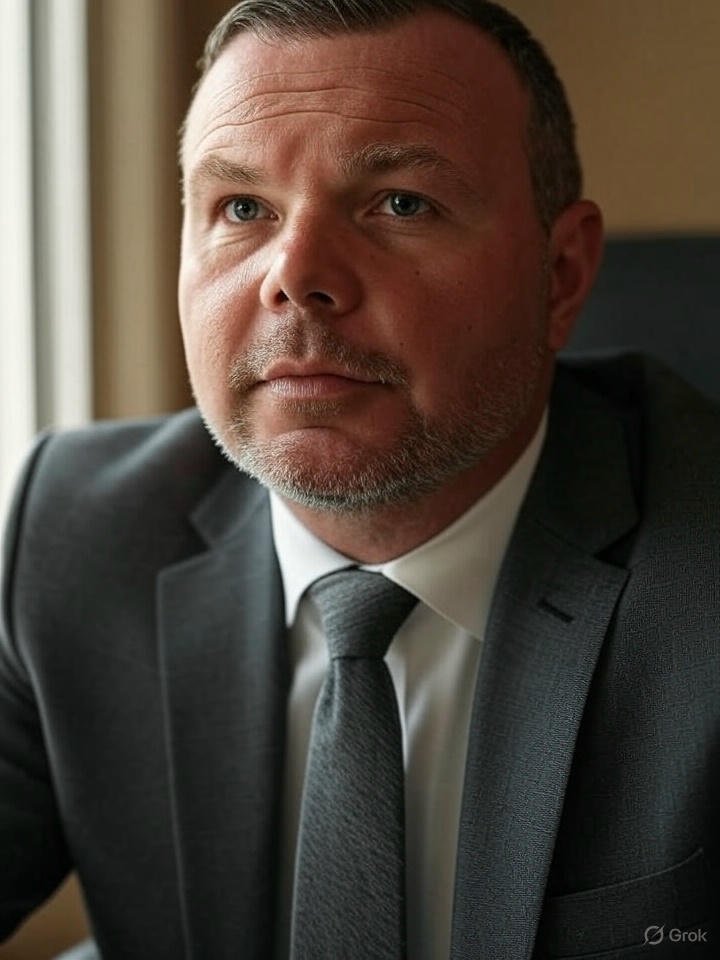
Warren Driscoll writes about luxury travel. He has over seven years of experience. Since 2018, he has stayed in private villas in Ibiza and Saint-Tropez, and chalets in the French Alps. Warren’s stories have been shared by Indvidual Magazine. He writes honest reviews and gives helpful tips to help people plan great holidays. He also shares his own photos and real experiences to make his advice clear and useful.