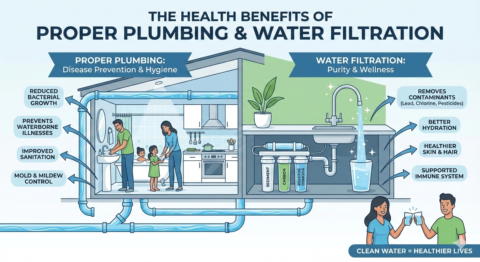
Most people associate plumbing with convenience: running water, flushing toilets, and hot showers on demand. But behind those everyday comforts is a deeper reality—plumbing systems play a direct role in human health. From the quality of the water we drink to the cleanliness of the air inside our homes, plumbing affects far more than most homeowners realize.
When plumbing systems are poorly designed, outdated, or neglected, they can introduce contaminants, promote bacterial growth, and contribute to long-term health issues. On the other hand, well-maintained plumbing paired with effective water filtration can significantly improve daily health outcomes, often in ways people notice only after the improvement is made.
This article explores how proper plumbing and water filtration support healthier living, why water quality matters more than it appears, and how modern systems help protect households from unseen risks.
The Direct Answer: How Does Plumbing Affect Health?
Proper plumbing and water filtration protect health by ensuring clean, safe water delivery; preventing contamination and bacterial growth; reducing exposure to chemicals and heavy metals; and supporting better hygiene, skin health, and respiratory comfort. Together, these systems form a foundational layer of home health protection.
Rather than being purely mechanical infrastructure, plumbing systems are part of a home’s health environment—much like ventilation or electrical safety.
Why Water Quality Is a Health Issue, Not Just a Taste Issue
Water Is Consumed and Absorbed Daily
Water enters the body in more ways than drinking. It is:
- Ingested through beverages and food preparation
- Absorbed through the skin during bathing and showering
- Inhaled indirectly as steam and vapor
Even small concentrations of contaminants can matter over time because exposure is continuous.
Municipal Treatment Doesn’t Mean Risk-Free
Municipal water treatment is designed to make water safe for mass distribution—not necessarily optimized for individual health sensitivities. While regulated by agencies such as Environmental Protection Agency, treated water may still contain:
- Chlorine or chloramines used for disinfection
- Sediment from aging infrastructure
- Trace heavy metals leached from pipes
- Byproducts formed during treatment
These substances are often within legal limits but may still affect taste, odor, skin sensitivity, or long-term exposure concerns.
The Role of Plumbing Infrastructure in Water Safety
Aging Pipes and Contamination Risks
Many homes—especially older ones—still contain legacy plumbing materials that were once standard but are now known to pose health risks. These can include:
- Galvanized steel pipes prone to corrosion
- Older copper piping with deteriorated joints
- Brass fixtures containing trace lead content
As pipes age, they can leach metals into the water supply or trap sediment and biofilm inside the system.
Cross-Connections and Backflow Issues
Improper plumbing design or failed components can allow contaminants to flow backward into potable water lines. Without adequate safeguards, non-drinkable water sources—such as irrigation or drain-adjacent systems—can compromise household water quality.
Proper plumbing design, maintenance, and testing reduce these risks and help ensure that clean water remains isolated from waste systems.
Whole-House Water Filtration: A Health-Focused Upgrade
Why Point-of-Use Filters Aren’t Always Enough
Pitcher filters and under-sink units can improve drinking water quality at a single faucet, but they do nothing for water used in:
- Showers and baths
- Laundry machines
- Bathroom sinks
- Dishwashers
Whole-house water filtration treats water at the point of entry, ensuring consistent quality throughout the home.
Health Benefits of Whole-House Filtration
Depending on the filtration media used, these systems can help reduce:
- Chlorine and chloramine exposure linked to skin and eye irritation
- Sediment that may carry microbes or heavy metals
- Odors and tastes that discourage proper hydration
For households with children, elderly residents, or individuals with sensitivities, whole-house filtration offers broad protection rather than isolated improvement.
Skin, Hair, and Respiratory Health
The Skin Is the Body’s Largest Organ
Chlorinated and chemically treated water can strip natural oils from the skin, leading to:
- Dryness and irritation
- Worsening of eczema or dermatitis
- Scalp sensitivity and brittle hair
Filtered water is gentler on skin and hair, especially during frequent exposure in showers.
Steam Inhalation and Air Quality
Hot showers create steam that carries volatile compounds into the air. In poorly ventilated bathrooms, inhalation exposure increases—particularly for chlorine byproducts. Reducing these compounds at the source improves not only water quality but also indoor air comfort.
Bacteria, Biofilm, and Plumbing Hygiene
Hidden Growth Inside Pipes
Even clean-looking plumbing can harbor biofilm—a thin layer of bacteria that adheres to pipe interiors. Biofilm can:
- Shelter harmful microorganisms
- Reduce water quality consistency
- Contribute to odors and discoloration
Proper system design, regular flow, and filtration reduce the conditions that allow biofilm to thrive.
Hot Water Systems and Temperature Control
Water heaters set too low can encourage bacterial growth, while systems set too high increase scalding risk. Proper plumbing configuration ensures safe temperatures while minimizing microbial risks.
Drinking Water Confidence and Hydration
Taste Influences Health Choices
Water that smells or tastes unpleasant discourages drinking. When people avoid tap water, they often replace it with:
- Sugary beverages
- Bottled water with inconsistent quality
- Inadequate hydration
Filtered water that tastes clean and fresh encourages proper hydration, supporting:
- Kidney health
- Digestion
- Cognitive function
Over time, this subtle shift can have meaningful health benefits.
Plumbing Leaks, Moisture, and Indoor Health
The Health Impact of Undetected Leaks
Leaks aren’t just structural problems—they’re health risks. Persistent moisture creates ideal conditions for:
- Mold growth
- Dust mite proliferation
- Poor indoor air quality
These factors can aggravate allergies, asthma, and respiratory conditions.
Prevention Through Proper Plumbing Design
Well-maintained plumbing systems reduce the likelihood of hidden leaks. When combined with modern monitoring and shutoff devices, the risk of prolonged moisture exposure drops significantly.
Water Filtration and Vulnerable Populations
Children, Seniors, and Immune Sensitivity
Certain populations are more vulnerable to water quality issues:
- Infants exposed to contaminants during formula preparation
- Seniors with weakened immune systems
- Individuals with skin or respiratory conditions
Consistent, filtered water throughout the home provides an added layer of protection for these groups.
Long-Term Health vs. Short-Term Compliance
Legal Standards vs. Optimal Health
Water quality regulations focus on population-level safety, not individual optimization. A system can meet legal requirements while still containing substances some households prefer to avoid.
Proper plumbing and filtration allow homeowners to exceed minimum standards and tailor water quality to their specific needs and sensitivities.
The Compounding Effect of Good Plumbing
Proper plumbing is rarely noticed when it works well—but its health benefits accumulate quietly over time:
- Fewer skin and hair issues
- Reduced exposure to irritants and contaminants
- Lower risk of moisture-related illnesses
- Greater confidence in daily water use
Unlike cosmetic home upgrades, these benefits affect every day and every member of the household.
A Broader Perspective on Home Health
Homes are ecosystems. Air, water, temperature, and cleanliness interact continuously. Plumbing systems influence all of these elements, even though they remain hidden behind walls and beneath floors.
When plumbing is thoughtfully designed and paired with effective water filtration, it becomes a health-supporting system rather than a background utility.
Final Thoughts
Proper plumbing and water filtration are not luxury upgrades or niche concerns—they are foundational components of a healthy living environment. By delivering cleaner water, preventing contamination, reducing moisture-related risks, and supporting daily hygiene, these systems protect health in ways that are both immediate and long-lasting.
As awareness of environmental health grows, plumbing is increasingly recognized not just as infrastructure, but as an essential contributor to overall well-being.

Experienced SEO Specialist and Web Developer with a strong focus on off-page SEO and guest posting. With 3 years of proven expertise, I help businesses improve their search rankings and build sustainable online presence.